
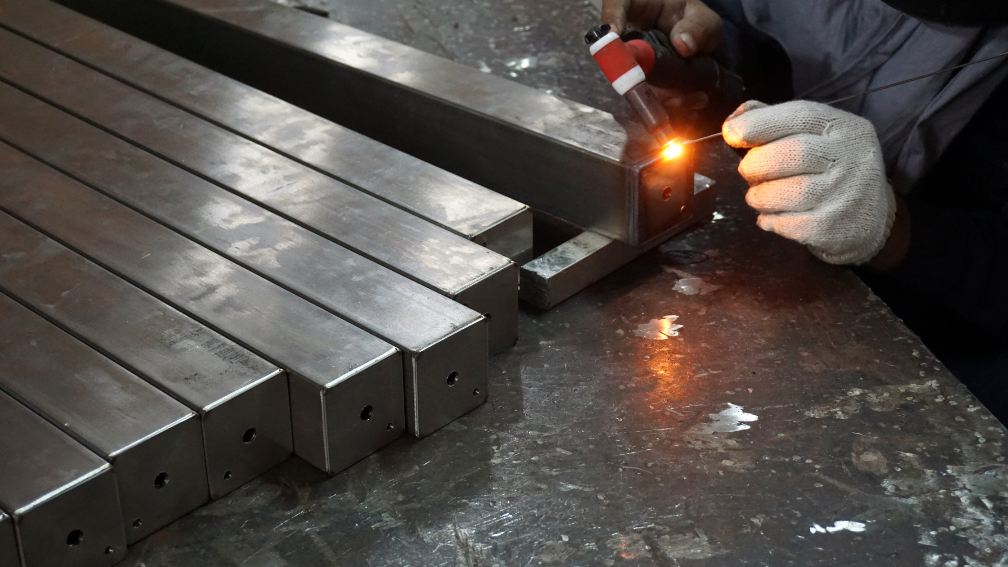
Why These Three Factors Matter More Than Price
In steel pipe procurement, price is often the first discussion point but it is rarely the reason projects succeed or fail. Across fabrication yards, industrial sheds, PEB structures, infrastructure projects, and solar installations, three technical-commercial factors quietly determine sourcing efficiency: MOQ (Minimum Order Quantity), custom lengths, and manufacturing tolerances.
Asian Steels has worked closely with fabricators, EPC contractors, and procurement managers who learned sometimes the hard way that misunderstanding these parameters leads to excess inventory, fabrication rework, site delays, and cost overruns. As an India’s trusted steel pipe supplier and an established industrial steel pipe company, Asian Steels approaches these topics transparently and practically.
This long-form buyer guide explains how MOQ, custom lengths, and tolerances actually work in steel pipe manufacturing and how informed buyers can use this knowledge to source more efficiently from the right manufacturer of steel pipes, ensuring long-term consistency, cost control, and fabrication efficiency.
Understanding MOQ in Steel Pipe Manufacturing
MOQ, or Minimum Order Quantity, is the smallest quantity a steel pipe manufacturer can produce economically in a given size, thickness, and specification. It exists not as a sales tactic, but as a manufacturing necessity.
A manufacturer of steel pipes operates continuous production lines where setup time, raw material utilization, testing, and logistics must be optimized. This is why experienced buyers prefer sourcing from a dependable manufacturer of steel pipes rather than fragmented suppliers. Producing very small quantities disrupts efficiency and increases per-unit cost, which ultimately affects both supplier and buyer.
Why Steel Pipe Manufacturers Set MOQs
Steel pipe production involves several fixed steps: – Coil loading and slitting – Roll calibration and forming setup – Welding parameter adjustment – Quality inspection and testing
Each setup consumes time and resources regardless of order size. MOQ ensures that these fixed costs are spread reasonably across output, allowing manufacturers to maintain consistent quality and competitive pricing.
For standard products, MOQs are often lower. For custom sizes, thicknesses, or coatings, MOQs increase due to additional setup and validation requirements.
MOQ Differences by Pipe Type and Application
Square and Rectangular Pipes
Products such as MS Square & Rectangular Steel Pipes and GP Square & Rectangular Steel Pipes often have optimized MOQs because of consistent demand from fabrication, sheds, and PEB projects.
Galvanized Pipes
For outdoor and corrosion-prone applications, GI Square & Rectangular Steel Pipes may carry slightly higher MOQs due to coating requirements and inspection standards.
Round Pipes and Heavy-Duty Pipes
GP Round Steel Pipes generally offer flexible MOQs for standard sizes, while SAW Pipes used in heavy engineering and infrastructure typically require higher MOQs due to specialized production.
MOQ Flexibility for Long-Term Buyers
Experienced buyers understand that MOQ is not always rigid. Manufacturers may offer flexibility for: – Repeat orders – Long-term sourcing agreements – Dealers and distributors
Asian Steels supports such partnerships through structured programs and encourages qualified partners to Become a Dealer for better supply planning and MOQ optimization.
Understanding Custom Lengths in Steel Pipe Orders
Standard steel pipe lengths are designed to balance manufacturing efficiency and transport practicality. However, fabrication-driven projects often benefit from custom lengths to reduce cutting, wastage, and handling.
Custom lengths are particularly valuable in: – Fabrication workshops – Industrial sheds – PEB structures – Solar mounting systems
How Custom Lengths Impact Cost and Lead Time
Custom lengths may require: – Additional cutting operations – Separate inspection procedures – Modified packing and logistics
As a result, custom-length orders may influence pricing and delivery timelines. A transparent manufacturer of steel pipes communicates these implications clearly before order confirmation.
Raw Material Role in Length and Dimensional Accuracy
Length consistency begins with raw material quality. Pipes manufactured from CRCA Coil Steel Sheets deliver superior dimensional stability and surface finish.
For galvanized pipes, GP / GC Coil Steel Sheets ensure uniform zinc coating and adhesion critical when tight tolerances are required.
What Are Tolerances in Steel Pipes?
Tolerance refers to the permissible variation in: – Wall thickness – Length – Outer dimensions – Straightness
No manufactured product can be produced at zero deviation. Tolerances define what variation is acceptable without compromising performance.
Why Tolerances Matter to Fabricators and EPCs
Loose tolerances can cause: – Alignment issues – Excessive welding gaps – Structural imbalance
Tight tolerances reduce rework and improve productivity, particularly in fabrication and PEB structures where modular accuracy is essential.
Manufacturers adhering to strict Quality Standards maintain controlled tolerances to ensure reliability.
Thickness Tolerances Explained
Wall thickness tolerance directly affects strength and cost. Under-gauge pipes compromise safety, while over-gauge pipes increase weight and expense.
Asian Steels enforces continuous thickness monitoring to maintain balance between performance and material efficiency.
Length and Straightness Tolerances
Even with custom lengths, small length variations apply. Straightness tolerance ensures pipes remain fabrication-friendly and structurally stable.
Clear tolerance communication between buyer and supplier prevents disputes at delivery.
Manufacturing Infrastructure and Tolerance Control
Modern ERW and SAW lines use automated monitoring systems to control tolerances throughout production. Asian Steels’ capabilities, detailed under Our Facilities, support repeatable accuracy at scale.
Application-Based Considerations
Different applications demand different tolerance expectations: – Fabrication frameworks require tight dimensional control – Industrial sheds balance strength and economy – PEB structures demand precision for bolt alignment
Buyers can match specifications to use cases through Applications.
Common Buyer Mistakes to Avoid
- Ignoring MOQ implications
- Assuming custom lengths have no cost impact
- Expecting zero tolerance
- Choosing suppliers without documented quality systems
Avoiding these mistakes improves sourcing outcomes.
Why Asian Steels Is a Reliable Manufacturing Partner
Asian Steels operates as a disciplined manufacturer of steel pipes with a strong Gujarat manufacturing base and is recognised as a reliable manufacturer of steel pipes for fabrication, infrastructure, and industrial projects across India. By combining MOQ transparency, custom length feasibility, and strict tolerance control, the company supports fabricators, EPCs, and infrastructure developers across India.
Buyers planning efficient steel pipe procurement can View our product range to understand available specifications and Explore our applications to align products with project needs. For MOQs, custom lengths, tolerances, pricing, and delivery planning, Contact us for a quote via the Contact Page. Businesses seeking long-term collaboration may also Become a Dealer and partner with a dependable manufacturing source.
Conclusion
MOQ, custom lengths, and tolerances are not constraints they are tools that help balance efficiency, quality, and cost when working with a professional manufacturer of steel pipes that understands fabrication and project realities. Buyers who understand these parameters gain stronger control over fabrication efficiency and project timelines.
By combining manufacturing discipline with buyer education, Asian Steels continues to support smarter, more predictable steel pipe sourcing across India.
