
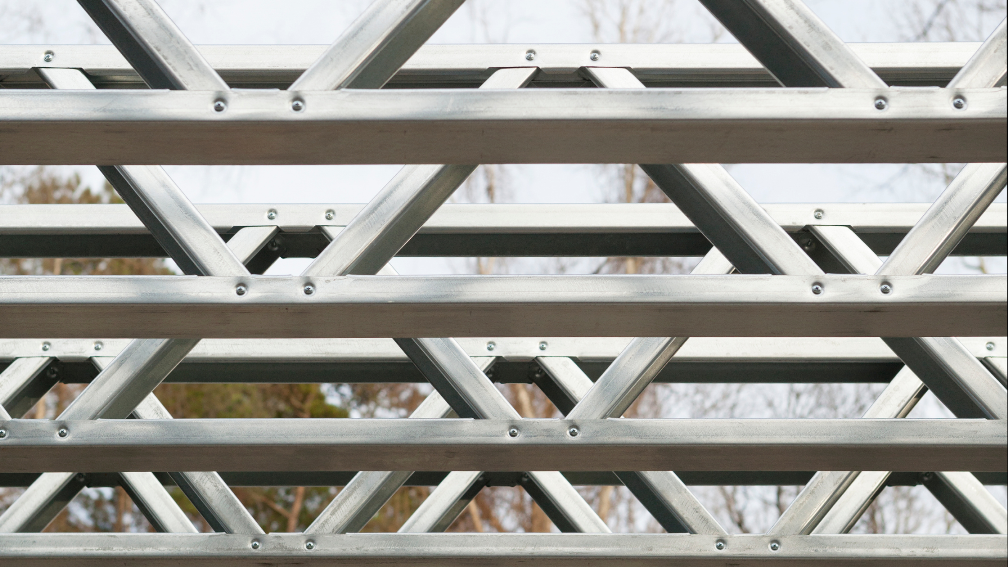
Introduction: Asian Steels at the Center of a Changing Steel Pipe Landscape
India’s steel pipe industry is undergoing a fundamental transformation. Large-scale solar installations, infrastructure expansion, industrial corridors, and logistics parks are redefining how steel pipes are designed, manufactured, and specified. Pipes are no longer selected only by size and price; they are evaluated by structural performance, corrosion resistance, lifecycle durability, and installation efficiency.
Asian Steels has evolved alongside these shifts by aligning manufacturing discipline with real-world project demands. Recognised as India’s trusted steel pipe supplier and a leading steel pipe manufacturer in Gujarat, the company focuses on accuracy, consistency, and application-driven product design. This approach has strengthened its role as a dependable manufacturer of steel pipes for solar, infrastructure, and industrial projects.
This buyer-focused blog explains how demand from solar and infrastructure sectors is reshaping steel pipe design and what engineers, fabricators, and procurement teams must know when sourcing from the right manufacturer of steel pipes.
Why Solar & Infrastructure Projects Are Driving Design Change
Solar and infrastructure projects differ from traditional construction in one major way: they are designed for long service life with minimal tolerance for failure. Solar structures must perform for 25 years or more, while infrastructure assets are expected to last decades under dynamic loads and harsh environments.
This reality has pushed steel pipe design toward: – Higher structural efficiency – Improved corrosion resistance – Optimized wall thickness – Tighter dimensional tolerances
Manufacturers unable to adapt to these expectations are quickly becoming irrelevant.
Solar Energy Demand and Its Influence on Pipe Design
Solar mounting structures rely heavily on steel pipes for columns, beams, bracing, and tracking systems. These structures face continuous exposure to wind, rain, temperature variation, and UV radiation.
As a result, solar demand has reshaped pipe design in the following ways: – Preference for galvanized and coated pipes – Emphasis on uniform section geometry – Weight optimization without compromising strength
Products such as GI Square & Rectangular Steel Pipes and GP Round Steel Pipes have become standard choices for solar applications.
Infrastructure Growth and Structural Performance Expectations
Infrastructure projects highways, metros, bridges, industrial parks, and logistics hubs demand pipes capable of handling static and dynamic loads.
Design changes driven by infrastructure demand include: – Increased wall thickness control – Improved weld integrity – Higher straightness standards
Heavy-duty applications may specify SAW Pipes for their superior weld strength and thickness capability.
Shift from Commodity Pipes to Engineered Products
Earlier, steel pipes were treated as interchangeable commodities. Today, solar and infrastructure projects demand engineered products with defined tolerances and documented quality.
A professional manufacturer of steel pipes now works closely with buyers to align pipe design with application-specific requirements rather than generic specifications.
Role of Raw Material Selection in Modern Pipe Design
Raw material quality has a direct impact on pipe performance. Pipes manufactured from CRCA Coil Steel Sheets offer better dimensional stability and surface finish.
For corrosion protection, GP / GC Coil Steel Sheets enable consistent galvanization suitable for outdoor infrastructure and solar projects.
This material discipline differentiates an industrial steel pipe company from volume-focused suppliers.
Manufacturing Accuracy and Design Consistency
Modern design expectations cannot be met without precise manufacturing. Slitting, forming, and welding accuracy directly influence: – Load-bearing capacity – Installation speed – Long-term reliability
Asian Steels enforces strict process control supported by documented Quality Standards to ensure repeatable quality across large volumes.
Dimensional Precision for Modular Assembly
Solar and infrastructure projects increasingly rely on modular assembly. Pipes must fit together without site-level modifications.
Products such as MS Square & Rectangular Steel Pipes and GP Square & Rectangular Steel Pipes support modular construction by maintaining consistent dimensions.
These are often regarded as the best and top choices for fabrication-driven projects.
Corrosion Resistance as a Design Priority
Long-term exposure demands superior corrosion protection. Galvanized pipes manufactured under controlled coating processes reduce maintenance and replacement costs.
Solar developers and infrastructure planners increasingly specify coating thickness and inspection standards upfront.
Supply Scale and Design Standardization
Large projects require standardization across thousands of components. Design consistency simplifies procurement, fabrication, and site installation.
Asian Steels supports this requirement through scalable production detailed under Our Facilities, reinforcing its position as a reliable manufacturer of steel pipes.
Application-Based Design Evolution
Solar Structures
Design focuses on corrosion resistance, lightweight sections, and fatigue resistance.
Infrastructure Structures
Design emphasizes strength, weld integrity, and dimensional stability.
Buyers can review recommended solutions across sectors through Applications.
Why Buyers Prefer Asian Steels in a Changing Market
Asian Steels combines application insight, manufacturing discipline, and quality assurance to meet evolving design expectations. Operating as a steel pipe manufacturer in Gujarat with national reach, the company supports long-term infrastructure and renewable energy growth.
Businesses seeking deeper collaboration may Become a Dealer and grow with future-ready supply chains.
Conclusion
Demand from solar and infrastructure sectors is permanently reshaping steel pipe design in India. Pipes are now engineered for longevity, precision, corrosion resistance, and performance rather than short-term cost advantages.
By aligning design evolution with manufacturing accuracy, raw material discipline, and application understanding, Asian Steels continues to perform as a dependable manufacturer of steel pipes supporting India’s next phase of growth.
Project planners and fabricators can View our product range to explore solar- and infrastructure-ready pipe options and Explore our applications to align products with project needs. For specifications, quantities, and delivery planning, Contact us for a quote through the Contact Page. Those interested in long-term partnerships may also become a dealer.
Frequently Asked Questions (FAQs)
Why are steel pipes preferred for solar and infrastructure projects?
Steel pipes offer high strength-to-weight ratio, long service life, and excellent resistance to wind, load, and environmental stress. These properties make them ideal for solar mounting structures and large infrastructure frameworks.
How has solar demand changed steel pipe design?
Solar projects require pipes with improved corrosion resistance, tighter dimensional tolerances, and optimized wall thickness to ensure 25+ years of outdoor performance with minimal maintenance.
What role does manufacturing accuracy play in infrastructure projects?
Accurate slitting, forming, and welding ensure consistent dimensions, stronger joints, and faster on-site installation critical for large-scale infrastructure execution.
Which steel pipe types are commonly used in solar structures?
Square and rectangular pipes are used for frames and bracing, while round pipes are used for columns and vertical supports depending on structural design.
How can buyers select the right steel pipes for their projects?
Buyers should evaluate application requirements, corrosion exposure, load conditions, and work with an experienced manufacturer of steel pipes that follows documented quality standards.
Why is Asian Steels suited for future-ready steel pipe supply?
Asian Steels combines manufacturing discipline, application insight, and scalable production to support evolving solar and infrastructure demands across India.